
Lionel Messi: Complete Story, Records, and Legacy of The Greatest Football Player
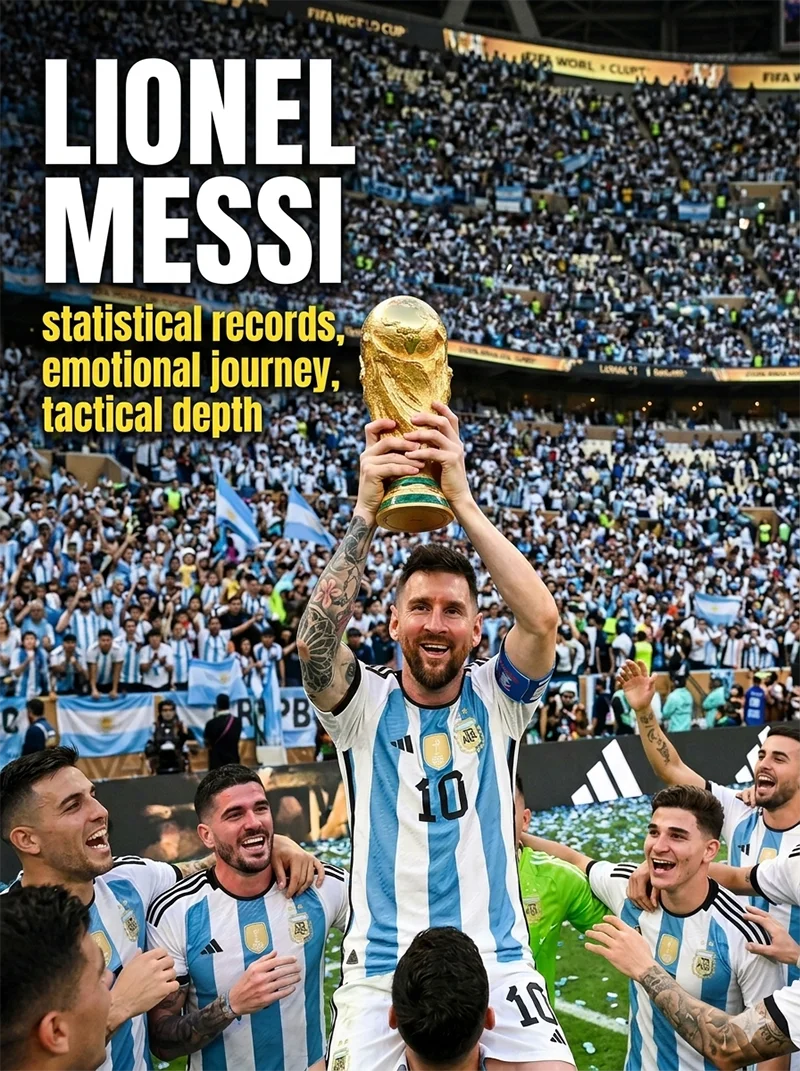
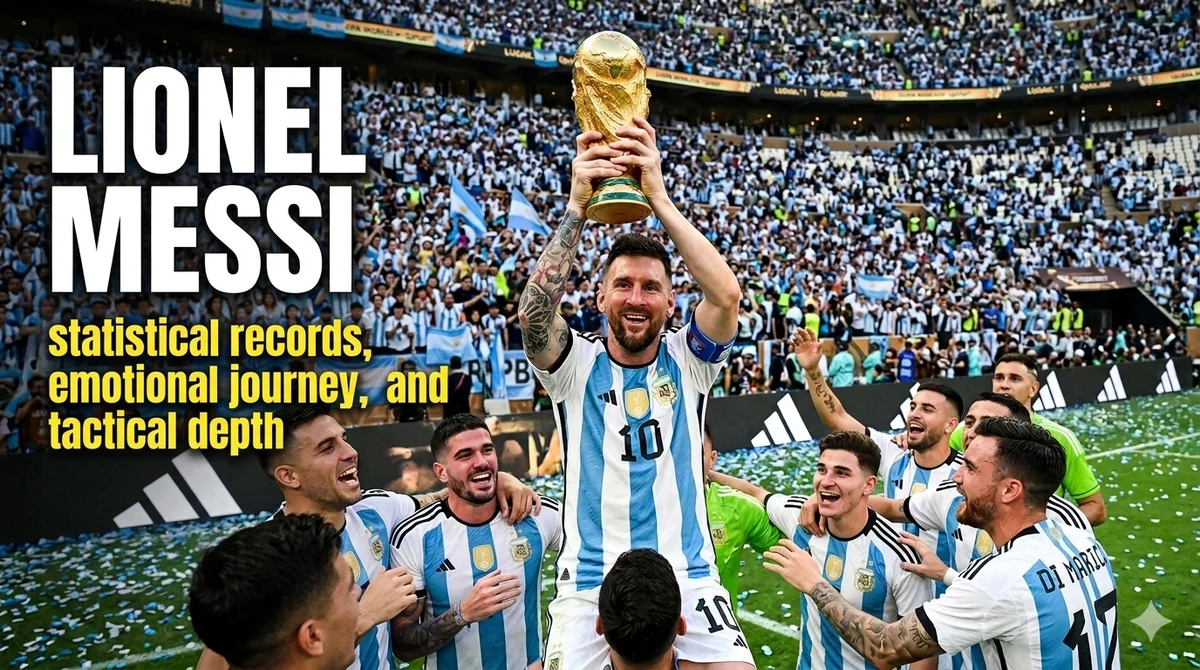
This is the deep story of the greatest player, Lionel Messi -a complete look at his life, his tactical intelligence, his record-breaking feats, and the humble human being behind the famous number 10 jersey.
Disclaimer
The Grandma's Blessing That Started It All
Lionel Andrés Messi was born on June 24, 1987, in Rosario, Argentina. He grew up in a working-class neighborhood, the son of a steel factory manager and a part-time cleaner. Football was not just a hobby in the Messi household; it was a way of life. At just four years old, young Leo joined local club Grandoli, coached by his father. However, it was his grandmother, Celia, who recognized his true spark. She would fight with coaches to let the tiny boy play against older kids. To this day, every time the greatest football player scores and points his fingers to the sky, he is paying tribute to Grandma Celia, who passed away before seeing him achieve global stardom.
Joining football club at Rosario
By the age of eight, Messi joined the youth ranks of Newell’s Old Boys, his boyhood club. It was here that a youth team named after their birth year went completely unbeaten for three years straight. Standing much shorter than his peers, Messi left defenders chasing shadows. His low center of gravity, rapid feet, and rare ability to keep the ball glued to his left shoe made him a well-known legend across local youth pitches.
The Napkin That Changed Football History
When Messi was 11 years old, a medical problem threatened to end his dreams. He was diagnosed with a growth hormone deficiency, a condition that restricted his natural growth and required expensive monthly treatments. His family’s insurance could only cover a small part of the cost, and local clubs could not commit to the financial burden during Argentina’s worsening economic crisis.
Entering FC Barcelona
The Spanish giants had heard rumors of an extraordinary talent in Rosario. First-team director Charly Rexach traveled to see him play. Blown away within minutes, Rexach knew Barcelona had to sign this young talent who would become the greatest football player. Lacking official paperwork at a casual restaurant meeting, Rexach famously wrote out Messi’s first contract on a nearby paper napkin on December 14, 2000. Barcelona offered to fund Messi’s medical treatments on one condition: the entire family had to move to Spain. At just 13 years old, a quiet boy who barely spoke packed his bags for Europe, changing the landscape of the sport forever as he developed into the greatest football player.
Chapter 2: The Barcelona Era (2004–2021) – Peak Football Perfection
La Masia and Rising Through the Ranks
Arriving at Barcelona’s famous academy, La Masia, Messi initially faced homesickness and physical challenges. He was so quiet that his teammates initially thought he could not speak. But on the pitch, his talent was loud. After clearing paperwork delays, Messi tore through the youth categories at a speed never seen before, sometimes playing for three different youth teams in a single month.

By MARIA ROSA FERRE – Flickr: La masia del F.C. Barcelona, CC BY-SA 2.0
On October 16, 2004, at just 17 years old, manager Frank Rijkaard gave Messi his official first-team debut in a game against Espanyol. Wearing a large number 30 jersey, his brief appearance showed the immense talent waiting to break loose. Many talent scouts already predicted he would become the greatest football player. Later that season, on May 1, 2005, Messi scored his first senior goal against Albacete – a delicate chip assisted by his mentor and global icon, Ronaldinho. As Ronaldinho carried Messi on his back during the celebration, it symbolised a passing of the torch to the future greatest football player.
The Guardiola Revolution and the False Nine
While Messi did well early on the right wing, his true transformation into an unstoppable force happened under Pep Guardiola in 2008. Guardiola looked at Messi’s vision, speed, and finishing and decided to build an entire tactical system around him.
This created the famous “False Nine” role. Instead of playing as a traditional striker stuck against big defenders, Messi would drop deep into midfield. This left defenders with a tough choice: if they followed him, they left open holes behind them; if they stayed still, Messi had all the time in the world to turn, face the goal, and open up defenses with deadly passing. As the greatest football player, he executed this perfectly.
The results were incredible. Barcelona won six club trophies in a calendar year in 2009, playing a beautiful brand of short-passing football. Messi captured his first Ballon d’Or that year, signaling the start of total individual dominance as the “False Nine” role
The Magical 91-Goal Calendar Year (2012)
If there was ever a year where Messi seemed superhuman, it was 2012. Over 365 days, Messi broke a record that many sports experts assumed would stand forever: Gerd Müller’s 1972 record of 85 goals in a single calendar year.
Messi did not just break the record; he shattered it by scoring an unbelievable 91 goals in all official competitions for Barcelona and Argentina. He proved once and for all that he was the greatest football player. He scored from everywhere: direct free-kicks, solo runs slicing through five defenders, delicate chips, and long-range rockets. It remains the highest individual peak any player has ever reached, cementing his status as the greatest football player.
The Unstoppable MSN Trio
As the years progressed, Barcelona evolved. In 2014, the club paired Messi with Uruguayan striker Luis Suárez and Brazilian winger Neymar Jr., forming a legendary attacking trio.
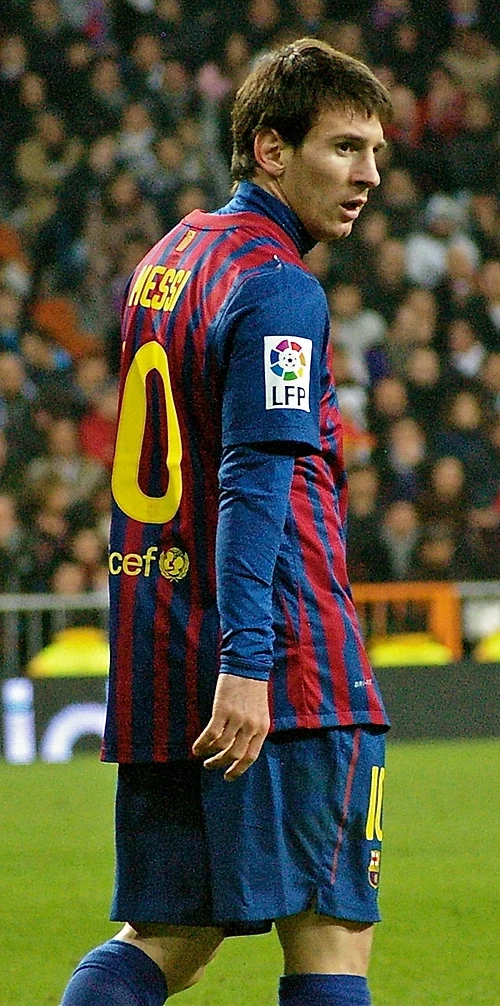
Unlike many superstar groups ruined by jealousy, they shared a deep friendship that resulted in perfect understanding on the pitch. In the 2014–15 season, they fired Barcelona to three major trophies, including the UEFA Champions League. Messi finished his Barcelona career with a staggering 672 goals and 34 major trophies, making him the greatest football player in club history.
By Addesolen – Own work, CC0 1.0
Chapter 3: The Heartbreaking Barcelona Exit & Paris Saint-Germain (2021–2023)
The Day the Football World Cried
August 5, 2021, remains one of the most shocking days in modern sports history. Messi had returned to Barcelona from his summer break fully intending to sign a new contract, even agreeing to a massive 50% pay cut to help the club’s bad financial position. However, due to financial mismanagement by previous club leaders and strict Spanish league rules, Barcelona announced that they were legally unable to register his contract. Fans were devastated to lose the greatest football player.
A few days later, a tearful Messi sat at a press conference, crying openly as he said goodbye to the only club he had known for 21 years. It was a harsh reminder of the cold business reality hiding behind the love of modern football.
The Paris Saint-Germain Chapter
Within days, the French team Paris Saint-Germain (PSG) signed him, pairing him back up with Neymar and French superstar Kylian Mbappe. Forced to wear the number 30 jersey because his iconic number 10 was taken, Messi’s first season in France was a difficult period of change. The physical nature of the league, an illness, and the emotional toll of leaving Spain disrupted his usual form.
However, his second season showed his elite footballing brain. Accepting a deeper role, Messi controlled the game from midfield, giving assists to Mbappe and Neymar. He helped PSG win back-to-back league titles before deciding his time in European football had reached its natural end, further proving he remains the greatest football player.
Chapter 4: The American Dream – Inter Miami CF (2023–Present)
Igniting a Soccer Boom in the United States
In the summer of 2023, turning down huge offers from Saudi Arabia and emotional calls for a Barcelona return, Messi shocked the world by signing with Major League Soccer (MLS) club Inter Miami CF, co-owned by David Beckham.
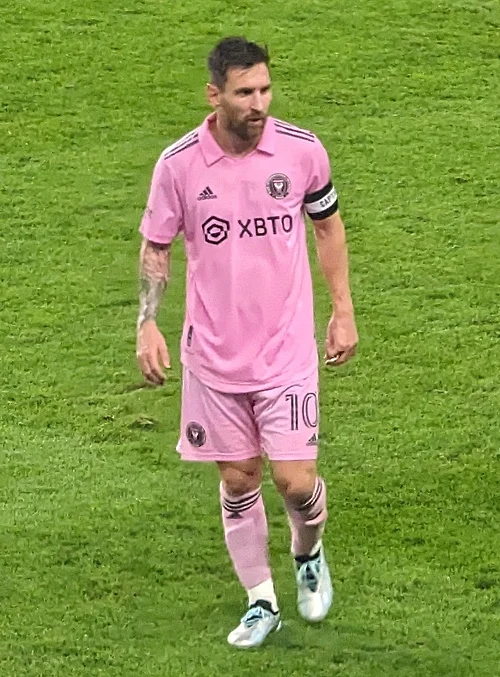
The effect in America was instant and massive. Ticket prices went up by over 1,000%, stadiums across the US sold out in minutes, and famous Hollywood celebrities lined up just to catch a glimpse of the greatest football player. On the pitch, Messi transformed an Inter Miami side sitting at the bottom of the league into instant champions. In his first seven games, he scored 10 goals, guiding the club to its first-ever trophy: the 2023 Leagues Cup.
By Hayden Schiff – Own work, CC BY 4.0
Chapter 5: The Unrivaled Record Book of Lionel Messi
To appreciate Messi’s consistency, you have to look at the numbers. He does not just break records; he sets benchmarks that may never be reached again.
Individual Accolades
Ballon d’Or Awards: A record 8 awards (2009, 2010, 2011, 2012, 2015, 2019, 2021, 2023).
European Golden Shoes: A record 6 awards as the top league goalscorer.
The Best FIFA Men’s Player: Won a record 3 times since its inception.
Laureus World Sportsman of the Year: Won 2 times (2020, 2023)—the only team-sport athlete to ever win it.
All-Time Statistical Records
Most Collective Trophies: Over 46 career team trophies, making him the most decorated player.
All-Time Senior Career Goals: Over 916 official goals for club and country.
Most Goals for a Single Club: 672 goals for FC Barcelona.
La Liga All-Time Top Scorer: 474 goals in Spanish top-flight history.
Most Assists in Football History: Over 410 official assists across his career.
World Cup Record Goalscorer: 18 goals across his tournament appearances.
Chapter 6: The Anatomy of a Genius - Playstyle & Tactical Secrets
What makes Lionel Messi completely unmarkable? It is not raw physical size or blinding sprint speed. Instead, his brilliance lies in his elite spatial awareness, technical mastery, and unmatched footballing brain.
1. The Art of Walking
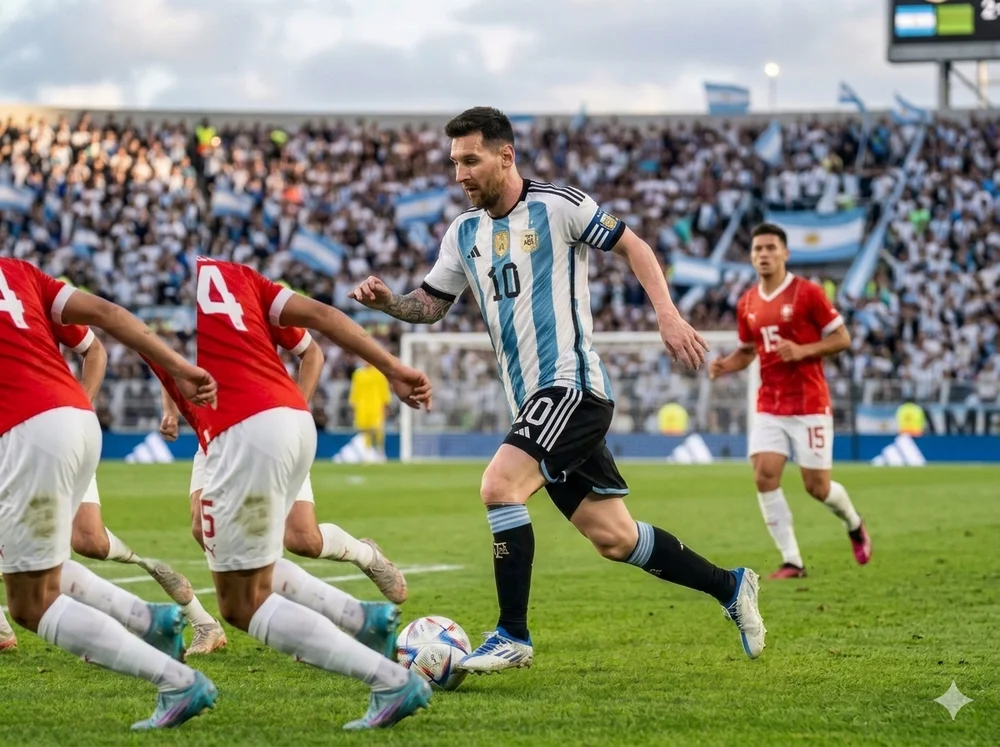
If you watch Messi during the first five to ten minutes of any match, he appears entirely detached. He slowly walks around the pitch, often ignoring the ball entirely. This is not laziness; it is a calculated gathering of information. Messi is actively studying the opposition defense, identifying which defender leaves a gap, which midfielder fails to track back, and where the open space will open up later in the match. By the time he receives the ball, he already knows his next three moves before defenders can react. This intelligence shows why he is the greatest football player.
2. Dribbling and Low Center of Gravity
Standing at 1.70 meters (5 feet 7 inches), Messi uses his short stature to his absolute advantage. His low center of gravity allows him to stop, turn, change direction, and speed up in tight spaces faster than taller, heavier defenders. Unlike players who rely on flashy tricks, Messi beats his markers with simple body movements, shoulder drops, and quick bursts of speed, keeping the ball exceptionally close to his feet.
3. Reinventing His Free-Kicks
Early in his career, Messi was not a regular free-kick taker. Realizing he needed to add this tool to his game, he spent hours practicing after training sessions. He completely adjusted his body movements, learning to plant his supporting foot at an angled 50-degree stance and arching his shoulders to achieve a more consistent dip and curve. This mid-career change resulted in over 65 direct free-kick goals, turning dead-ball situations into virtual penalties.
Chapter 7: Personal Life, Wealth, and Cultural Legacy
Family Values
Despite his massive global fame, Messi has maintained a very stable, quiet personal life. He is married to Antonela Roccuzzo, his childhood sweetheart from Rosario, whom he has known since he was five years old. The couple married in a hometown wedding in 2017 and have three sons: Thiago, Mateo, and Ciro. His family is always present at his matches, often running onto the pitch to celebrate his tournament victories.
Billionaire Status and Global Influence
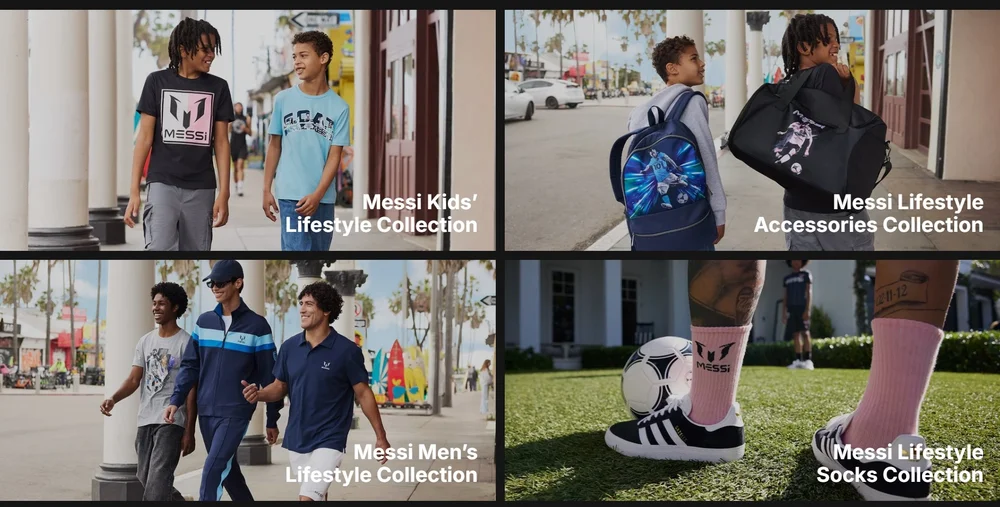
Messi’s financial impact matches his sporting achievements. In 2026, he officially entered the elite Forbes World’s Billionaires list, boasting an estimated net worth of $1.1 billion. His wealth is fueled by major long-term contracts, a lifetime partnership with sportswear brand Adidas, and his personal clothing label, The Messi Store. Recognizing his massive cultural impact, he was honored with the prestigious U.S. Presidential Medal of Freedom in 2025.
Philanthropy Through the Leo Messi Foundation
Off the pitch, Messi channels his wealth into global change through the Leo Messi Foundation, established in 2007. Spurred by his own childhood medical struggles, the foundation focuses entirely on giving vulnerable children equal access to healthcare, education, and sports. His foundation has funded research labs, built specialized medical centers in Barcelona, and provided emergency supplies to schools across Argentina and around the world.
Chapter 8: The Eternal Legacy of Number 10
As Lionel Messi approaches the final years of his active playing career, the debate over who is the greatest player to ever play the game feels completely settled for millions of fans worldwide. He has won every club trophy, dominated every individual category, rescued his nation from a historic drought, and broken the ultimate scoring records on the global stage.
But more than the mountains of gold trophies and mind-boggling statistics, Messi’s true legacy is the joy he brought to standard football fans. He proved that genius does not require towering size or arrogant bluster. With simple humility, hard work, and a magical left foot, a small boy from Rosario went out and completely conquered the world. He will forever remain the greatest football player.
Lionel Messi, the greatest football player - References
- Wikipedia – Complete Career History & Upbringing of Lionel Messi
- Forbes – Messi Records and Net Worth
- BBC – A rivalry that changed football
- Olympics – Lionel Messi vs Cristiano Ronaldo records and stats
Additional Reading
For further reading on Trusted Facts on Travel, Health, Sports, Tech etc., consider the following:
- Building Vanished at 32 Floors Only! 34th Floor Flat Buy Scam
- Top 10 Best-Selling Books of All Time in the World History
- Walking Palm Tree – The Amazing Tree in the Rainforests
- Future Inventions That Could Change the World Forever
- 8 Chiranjeevis in Hinduism – Immortals (Chiranjivi) and Their Significance
Pingback: What Did People Do Before Glasses? The Secret History of Ancient Eyesight - InfoGrapes